Tekken


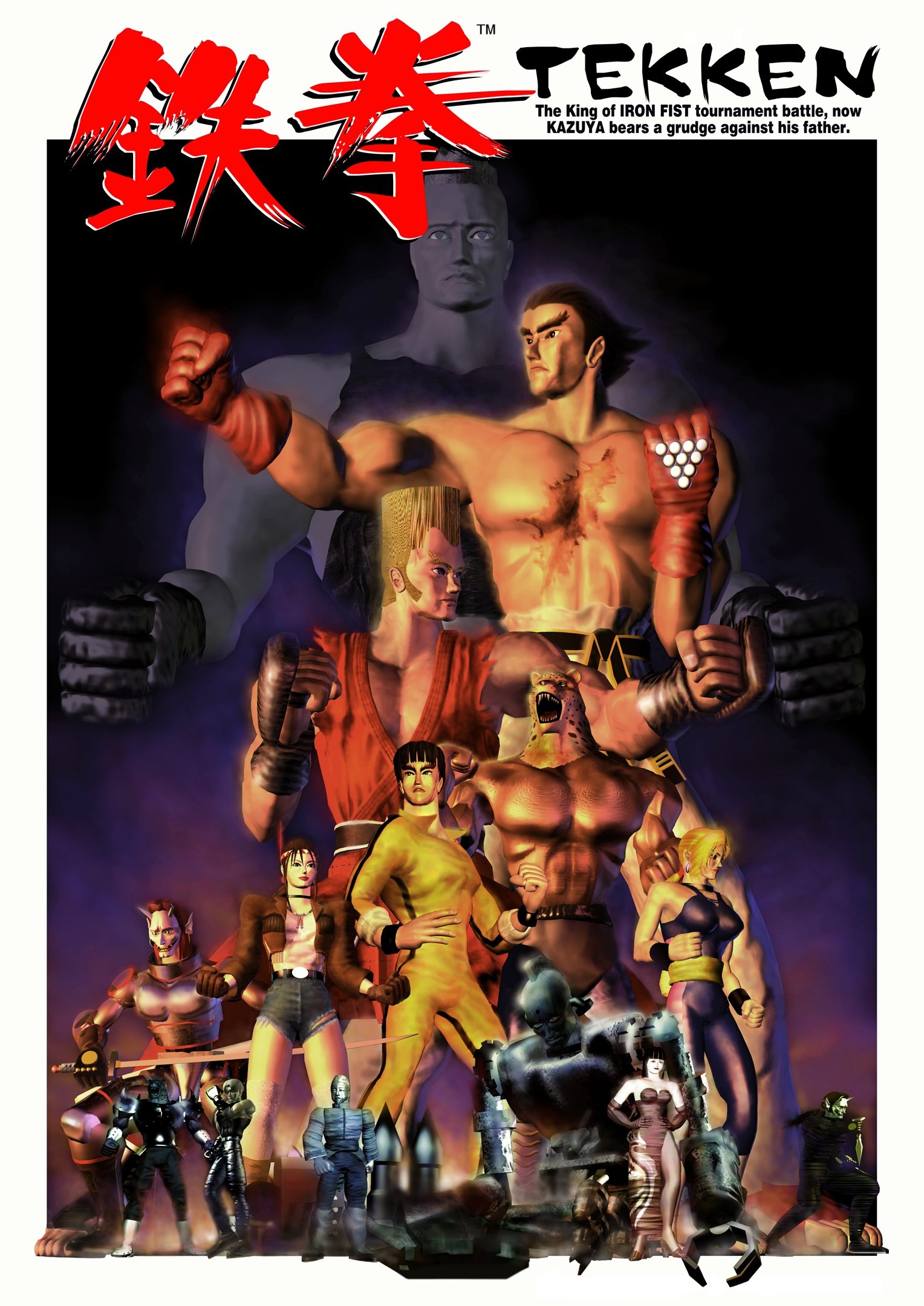
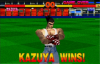
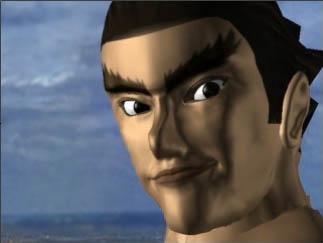
STORY: Heihachi Mishima, the powerful and ruthless
owner of the multi-national Mishima Zaibatsu, has announced the King of the Iron
Fist Tournament, a fighting competition with a one billion dollar cash prize.
There are eight competitors, and one of them is an undefeated world champion who
is apathetic towards the prize money and solely wants to take his revenge on
Heihachi. This man's name is Kazuya
Mishima, the son of Heihachi.
|
|
|
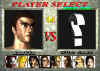
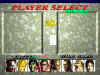
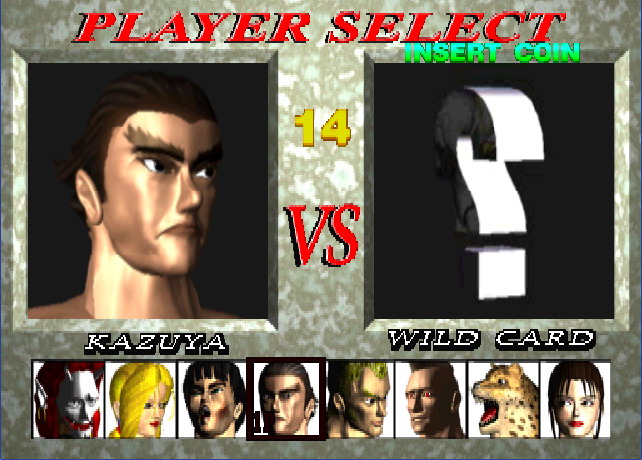
Tekken
Character Selection Screen.
|
(Story
continued) ... As history puts it, when Kazuya was five years
old, Heihachi threw him off a cliff to see whether or not he was really his son
(this would be determined by Kazuya's ability to survive the fall and climb back
up). Kazuya did indeed survive the fall, but it left a deep and bloody scar on
his chest which was slowly claiming his life. The Devil appeared before Kazuya,
offering him the opportunity to retrieve his strength back to take his revenge
on Heihachi in exchange for his soul. Kazuya, driven by anger and hatred,
accepted.
|
|
|
Tekken's
humble beginnings. . .
|
REVIEW: The original 3D fighting game known as
Tekken first emerged in arcades around the world in 1994/1995, joining the
current "reigning" 3D fighting game franchise, Virtua Fighter.
While not nearly as "pretty" as the likes of Virtua Fighter 2, Tekken
did one-up the original Virtua Fighter by running at a smooth 60 frames
per second. The title offered an
interesting cast of characters and some particularly hard-hitting gameplay to
the ever-growing fighting genre.
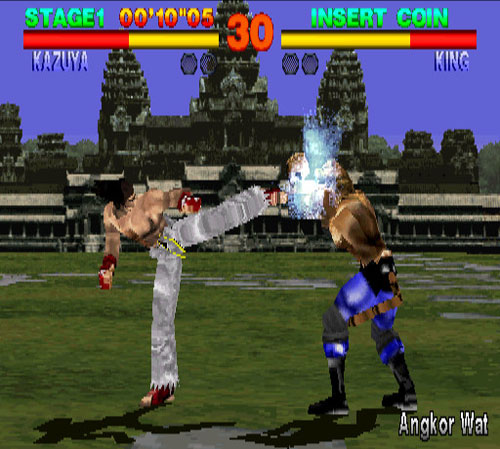
Tekken's control scheme introduced a
unique 4-button layout (which is still used today in the latest Tekken
games). Each button is assigned to a specific limb on the character,
making attacks feel natural to the player. Combining buttons allows for alternate
attacks and various throw techniques. Each
fighter has your basic punches, kicks, special moves and throws; a comparable
set-up to Virtua Fighter / Virtua Fighter 2. Each character can also execute at least
one 10-hit combo string, which requires hitting a series of buttons in order and
with proper timing.
|
|
|
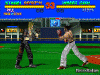
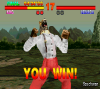
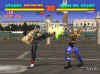
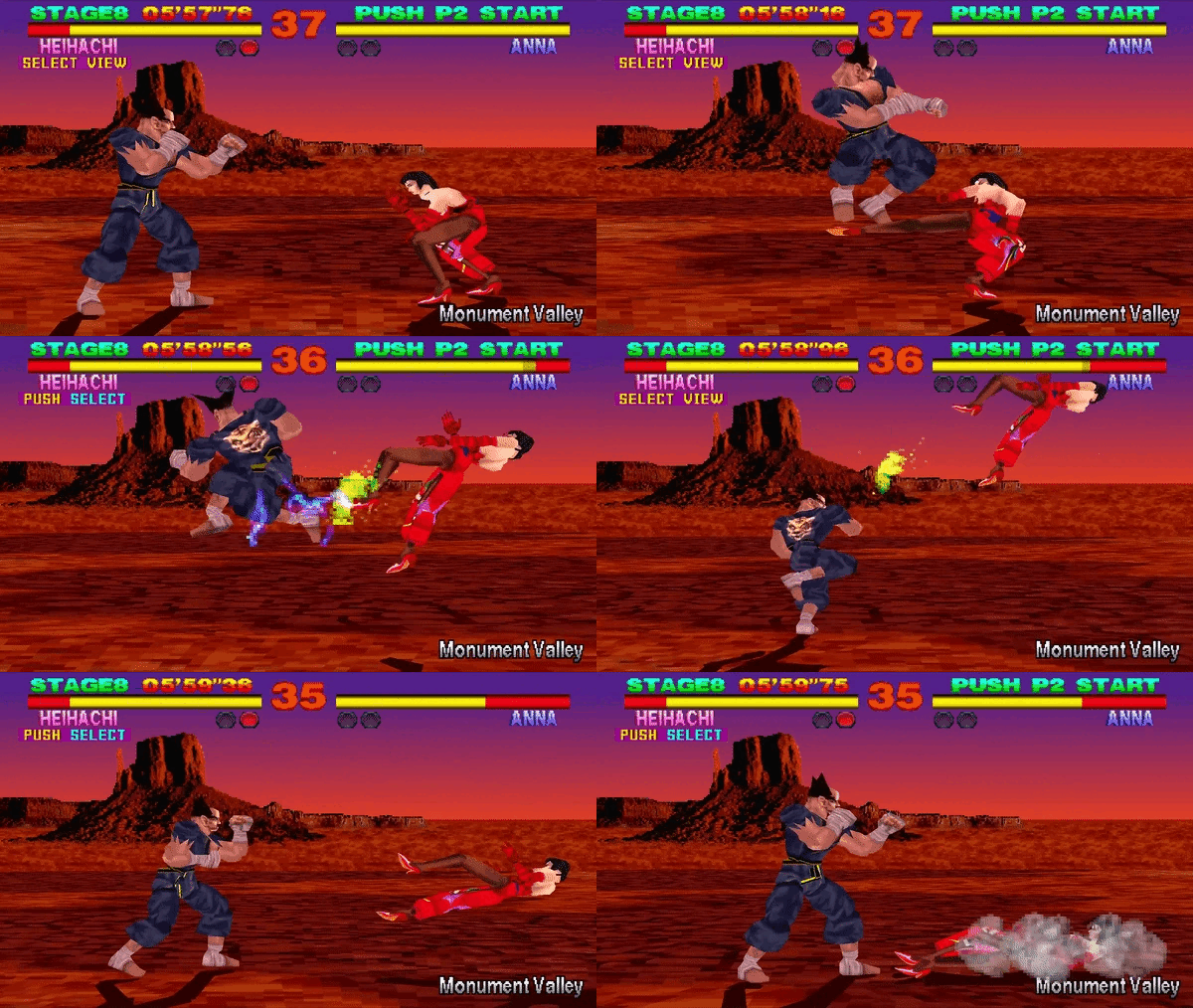
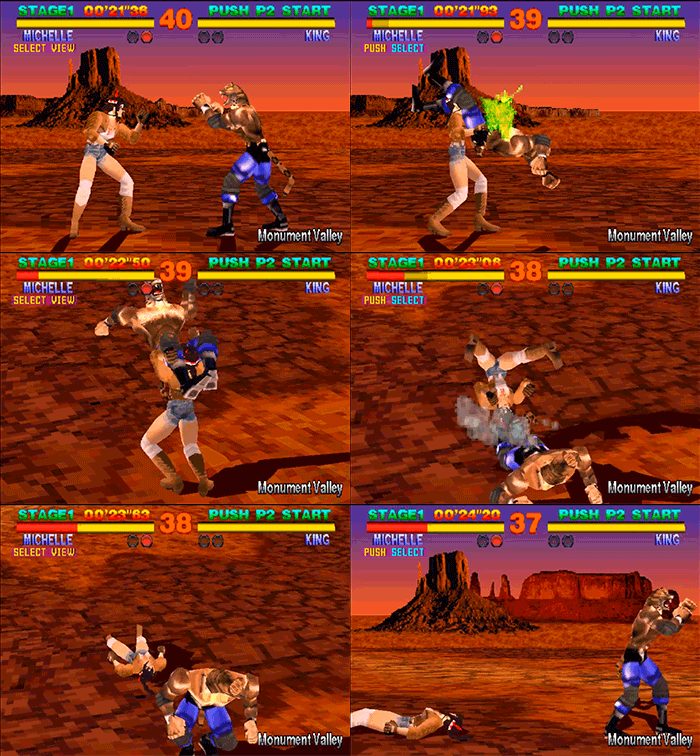
The
hardest-hitting throw animations of the mid 90s.
|
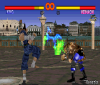
In Tekken, the 3D stages go on
indefinitely, as characters will never encounter a wall. This original gameplay
element offers unique mind games, allowing players to better set up their
attacks, as well as run & tackle each other after creating a distance.
Unlike future installments to the series, the first Tekken featured no sidestepping.
Characters can also jump incredibly high, making the game comparable to many of the top fighting games at the time (which
were simply running arcades in 1994).
Each
character presents a unique fighting style, packed with a generous variety of
priority attacks and some brutal looking throws. There were, however, a handful
of more "awkward" animations in the original Tekken, but the apparent
weirdness of the animation actually allowed the game to stand out even more
among its competitors (which wasn't a bad thing). 
|

|
|
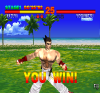
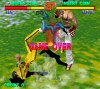
Memorable
martial arts moves and satisfying reactions.
|
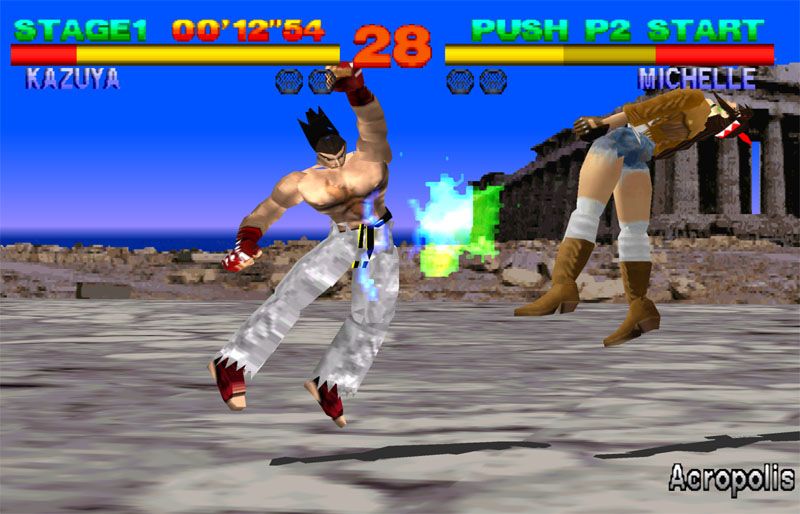
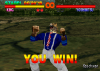
Even with its awkward moments, what Tekken's
animation did right was collision detection and "ouch factor". Characters
have a considerable amount of weight to them and nearly all of the moves in the
game look painful when they connect, possibly more so than in any other fighting
game in 1994/1995! Tekken also didn't feature any projectile attacks,
which really set it apart from the wildly popular Street Fighter
II series (where spamming Hadoukens and Sonic Booms run rampant).
Most of the moves that Tekken fighters perform also come off as "original"
from the start and certainly didn't blatantly
copy characters from other fighting games (which many "90s clone" 2D
fighting games were doing shamelessly).
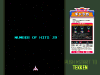
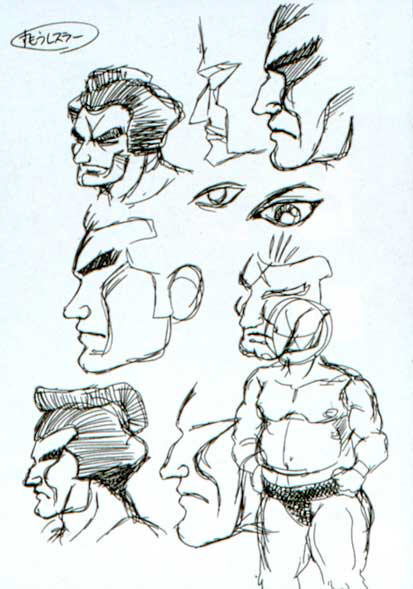
The biggest downside of the original Tekken was its
somewhat odd presentation. The character selection screen blasts some pretty
funny looking 3D-rendered character faces... did I say funny? I meant to say
UGLY.  Honestly, the game itself was also on the ugly side, even for the time.
Character models are a polygonal mess and the actual backgrounds are 2D,
basically warping around the 3D characters and square floor (which actually
became a trademark of the series). Even though the graphics weren't nearly as
impressive as some of the other 3D fighting games in '94, Tekken managed
to stand out with its original characters and unique style of animation &
gameplay. The fighting was also semi-realistic, an achievement which so few
fighting games even attempted, although characters are still able to jump
incredibly high (much like in Virtua Fighter).
Honestly, the game itself was also on the ugly side, even for the time.
Character models are a polygonal mess and the actual backgrounds are 2D,
basically warping around the 3D characters and square floor (which actually
became a trademark of the series). Even though the graphics weren't nearly as
impressive as some of the other 3D fighting games in '94, Tekken managed
to stand out with its original characters and unique style of animation &
gameplay. The fighting was also semi-realistic, an achievement which so few
fighting games even attempted, although characters are still able to jump
incredibly high (much like in Virtua Fighter).
|
|
|
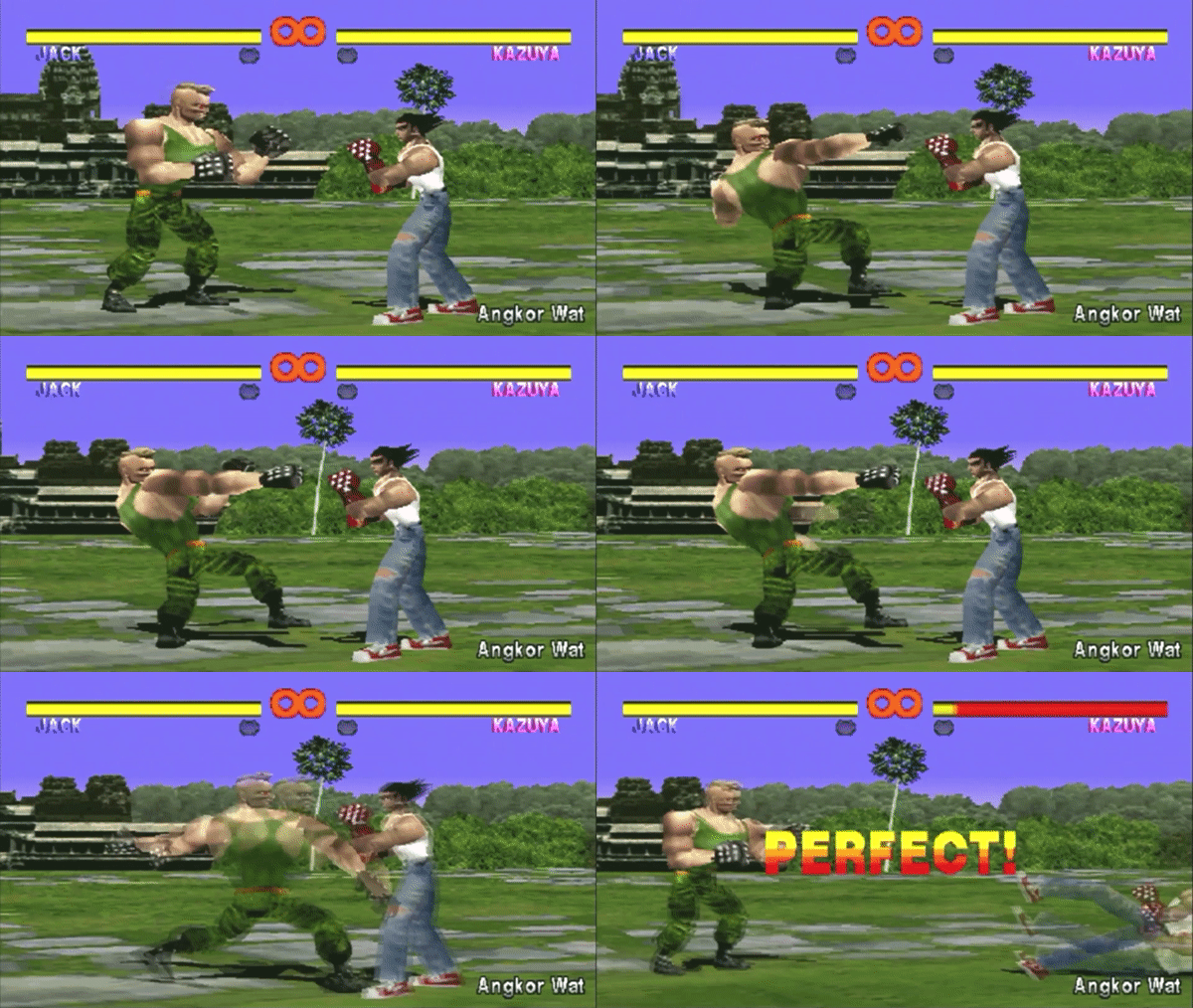
Hilarious (and
"difficult" input) special moves to learn & discover.
|
The PlayStation (PS1) version was a
faithful port of the arcade version, also presenting a new and very graphically
impressive intro movie for the time. Tekken was the first PlayStation
game to sell over a million copies and was awarded a Guinness World Record for
"The Best Selling Fighting Series for PlayStation Consoles". The
PlayStation version also featured impressive FMV character endings and allowed
players to unlock mid boss characters when the game was beaten. In more ways
than one, the original TEKKEN was no doubt a
"little-engine-that-could" story... soon developing into an impactful
and head-turning 3D fighting game series.
|
|

| Page Updated: |
October
20th, 2025
|
| Developer(s): |
Namco |
| Publisher(s): |
Namco |
| Designer(s): |
Seiichi
Iishi
Director
Hijame Nakatani
Producer |
| Platform(s): |
Arcade,
PlayStation, PSN
|
| Release Date(s): |
Dec.
9th, 1994
 Arcade Arcade
May 12th, 1994
WW Arcade
Mar. 31st, 1995
PS1
Nov. 7th, 1995
 PS1 PS1
Nov. 8th, 1995
 PS1 PS1
May 21st, 2011
 PSN PSN
May 21st, 2011
PSN
June 3rd, 2011
PSN
July 6th, 2011
PSN |
| Characters: |
Kazuya
Mishima, Marshall Law,
Jack,
King,
Nina Williams,
Michelle Chang,
Paul Phoenix,
Yoshimitsu,
Prototype
Jack, Lee Chaolan,
Armor
King, Ganryu, Wang
Jinrei,
Anna Williams,
Kuma,
Kunimitsu, Heihachi Mishima, Devil
Kazuya
|
| News
Links: |
Oct.
2025: Armor King Official Art by Jbstyle, Mastercup '26
Oct.
2025: Miary Zo Gameplay Reveal Trailer / Release Date |
|
|
|
Featured Video:
|
|
|
| Related Games: |
TEKKEN
2, TEKKEN 3, TEKKEN
Tag Tournament, TEKKEN 4, TEKKEN 5, TEKKEN
5: Dark Resurrection,
TEKKEN 5: Dark Resurrection Online, TEKKEN: Dark Resurrection,
TEKKEN 6, TEKKEN 6: BR, TEKKEN Tag Tournament 2, TEKKEN
7, TEKKEN 7: FR, TEKKEN
8, TEKKEN Hybrid, TEKKEN
3D: Prime Edition, TEKKEN
Advance, TEKKEN Revolution, Virtua Fighter, Virtua Fighter 2,
Street
Fighter 2,
Street Fighter EX,
Tobal No .1, Dead or Alive, Battle Arena Toshinden, Street
Fighter X TEKKEN, Namco X Capcom, Soul
Edge |
|

|
|
Gameplay
Engine
|
7.5 / 10
|
|
Story
/ Theme
|
8.0 / 10
|
|
Overall
Graphics
|
7.0 / 10
|
|
Animation
|
7.5 / 10
|
|
Music
/ Sound Effects
|
7.5 / 10
|
|
Innovation
|
8.0 / 10
|
|
Art Direction
|
6.5 / 10
|
|
Customization
|
5.0 / 10
|
|
Options / Extras
|
8.0 / 10
|
|
Intro / Presentation
|
8.5 / 10
|
|
Replayability / Fun
|
8.5 / 10
|
|
"Ouch" Factor
|
9.0 / 10
|
|
Characters
|
7.5 / 10
|
|
BOTTOM LINE
|
7.9 /
10
|
|
Review based on Arcade / PS1
versions
|
|
| Final
Words: |
This unorthodox 3D fighting game was the foundation of what
became one of the greatest, and best-selling fighting game franchises in
history. Most of us know Tekken
as a 3D fighting game, but the original Tekken played more like a 2D
fighter... while introducing innovative mechanics such as the 4-limb button system, chain throws, and 10-hit combos. Tekken surely had a lot of room to grow and improve, and that's exactly what it did over the decades!
The first Tekken had a certain coolness
about it, but definitely came off as more "laughable" than serious. The game didn't seem to take itself too seriously
(which also became a trademark of the series), while featuring authentic and hard-hitting martial arts techniques. Tekken 1 offered a unique blend of characters based in martial arts, pro-wrestling, as well as other obscure characters that made it stand out at arcades.
Months following its original arcade release, Tekken seemed to gain more and more steam. While fighting game fans of 90's arcades didn't seem sure about Tekken at first, I can remember crowds eventually forming around the Tekken 1 machine. Discovering new moves and characters kept the game
fresh! The hype and mystery surrounding Tekken continued strong until the release of Tekken 2 (which quickly became a smash hit.)
Tekken 1 was huge success on the Sony
PlayStation and quickly became a favorite among 3D fighting game fans. About 1
year after Tekken 1's original release, Tekken 2
hit the scene and was a vast improvement over
the original, soon becoming another monumental title in arcades and on PS1.
~TFG
Webmaster |
@Fighters_Gen
|
|
|
|
|
|
|
|
|
|
|
|
|
 View more
products at
View more
products at