Soul Calibur

STORY: In 1596, the mystical sword of the legends, the "Soul
Edge", ended up in the hands of the dread pirate Cervantes of Spain. For
the next 25 years he stayed dormant on the remnants of a Spanish port town,
taking the souls of those who reached him during their search of the sword. His
reign of terror was soon to start, but a divine
warrior (Sophitia) and an underground ninja (Taki) stopped him, breaking one of
the twin Soul Edge blades in the process. As it was about to tear itself apart,
a young knight (Siegfried) approached the port town. The moment he took the
hilt of the cursed blade, Soul Edge released a bright column of light into the
sky. This was known as the "Evil Seed", bound to bring calamity and
death across its path.
Three years after those events, Soul Edge uses
Siegfried as its host, and now Siegfried is Nightmare, a knight wearing azure
armor. Europe plunges into a vortex of slaughters as he and his followers claim
souls to strengthen the blade in its weakened state. Unknown to them, a group of
young warriors met on their journey to stop Soul Edge, and with them three
sacred weapons join once again.
|
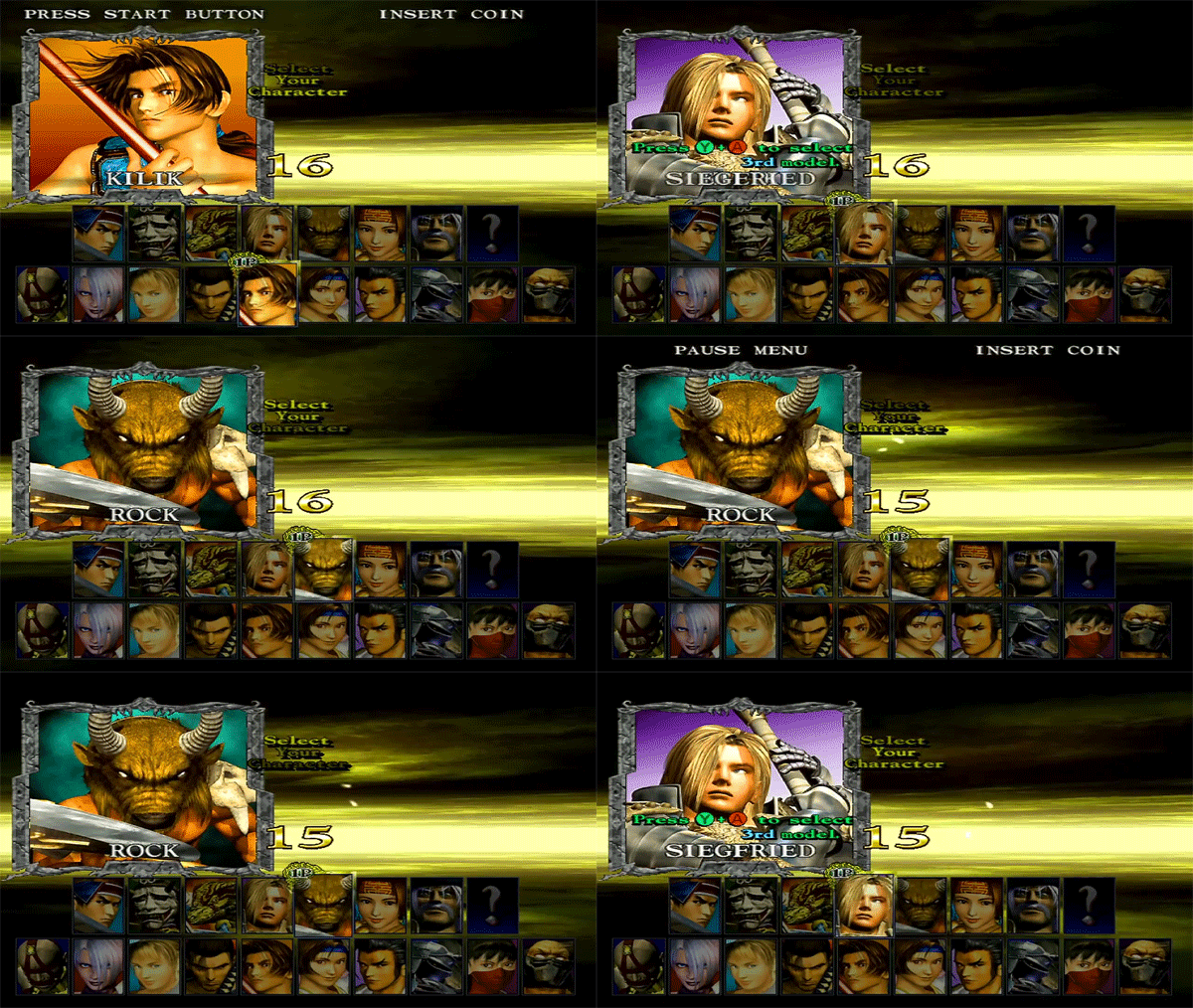
|
|
Welcome back to the stage
of history.
|
REVIEW:
Formerly known as Soul Edge at
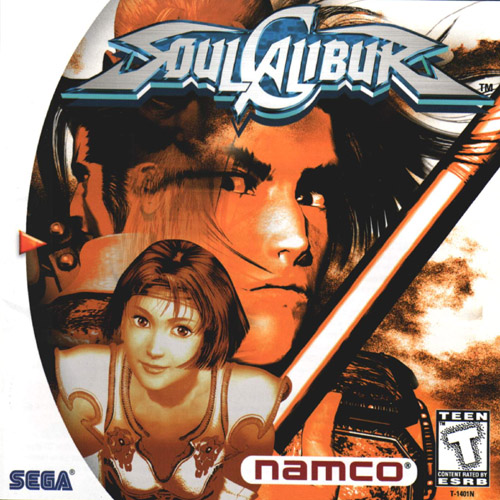
arcades and (Soul Blade on PS1), SoulCalibur completely
re-invented Namco's classic 3D weapon based series with exciting new mechanics and characters. SoulCalibur introduced
one of the most fluid and technically advanced fighting gameplay systems ever seen, not to mention running at a silky smooth 60
frames per second. The new gameplay innovations over the prequel (besides running
at 60 frames per second) include the 8-Way Run, allowing fighters to seamlessly move in any direction as they fight. Welcome to 3D fighting games —
there are 8 horizontal directions you can move in (and you can still jump, of course). The first SoulCalibur also introduced Guard Impacting, a defensive parry mechanic enabling the player to change the momentum of the fight with strong defense.
Most classic characters from the prequel make their return, each featuring tons of new attacks, techniques, and stances, but still
stay
true to their original weapon-based fighting
styles. The brand new characters, like Kilik & Ivy Valentine, bring incredibly innovative
weapon styles to the series which not only balance the dynamic roster, but steal the show.
|
|
|
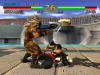
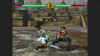
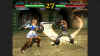
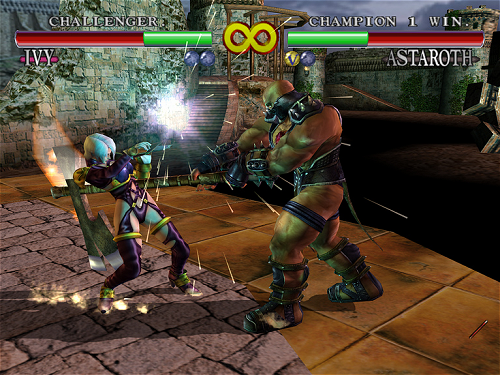
One of the
BEST looking
video games of 1999... if not ALL TIME.
|
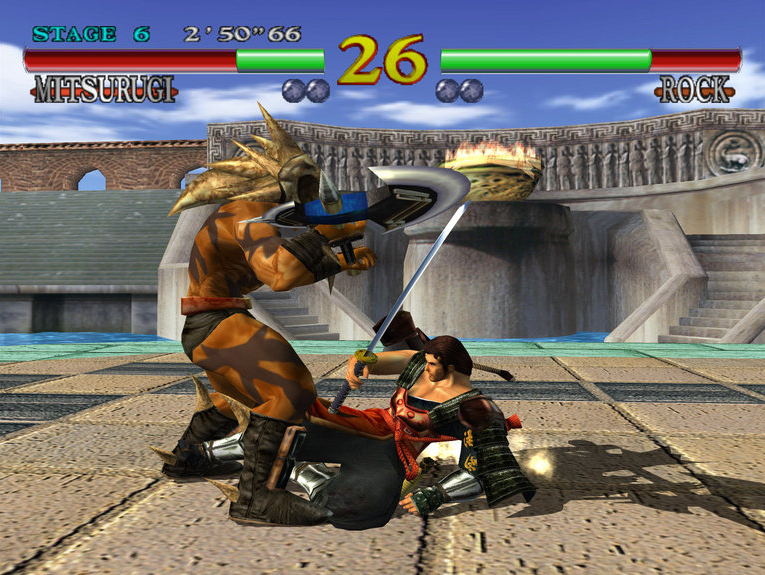
Through the use
of ultra-smooth motion capture, the characters of SoulCalibur animate with some of the
most fluid martial arts-inspired movements ever seen in a video game. Up close, they look
equally as good thanks to the improved character models, superb texture quality, and intense lighting effects on stages. Speaking of stages, the awesome stage variety and epic orchestral soundtrack define the "epic" mood of the game. Each stage is also shaped differently, which is a huge aspect of the gameplay... as high-level players will
adapt different Ring Out strategies and movement options depending on the stage. This is why a 3D fighting game like SoulCalibur is "deeper" than a 2D fighting game. It's a new plane, a new layer of gameplay that most fighting games simply don't have. Players who master the movement system and "3D" feel of the game
will easily outmaneuver and outperform those who would play the game "2D".
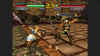
While incredibly solid when it comes to gameplay front, the arcade
version of Soul Calibur lacked graphical polish, containing semi-blocky character models & gritty textures. However, the later Dreamcast) version was a massive improvement over its arcade counterpart. The Dreamcast version
really cleaned things up,
showing off ultra-crispy visuals and even freshly rendered character models —
which practically made Soul Calibur look like an entirely new game. SoulCalibur is also one of the first games to feature such "talkative" characters. In 1999, not many other fighting games had characters that said so many lines of dialogue (and had mouths that actually animated and moved while they talk). Next-Gen!
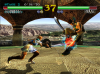
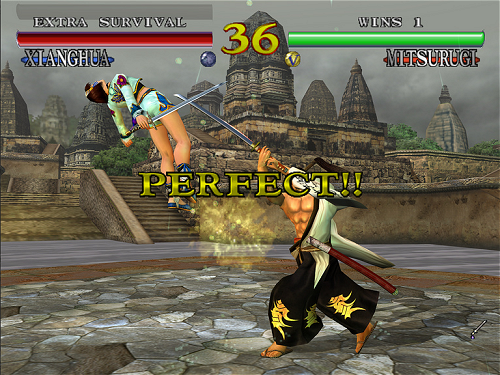
Sparkling hit effects, weapon trails, brilliant motion capture, and highly detailed stages complete the awesome graphical polish of this
unquestionably epic 3D fighting game. In addition to being one of the best-looking fighting games ever made, SoulCalibur was also the best-looking title at the launch of the Dreamcast. A system seller that's a fighting game? The last time that happened might've been Street Fighter 2 on the SNES. Even for those who didn't notice
how great SoulCalibur was at arcades, they surely knew the name SoulCalibur when the Dreamcast version came out.
|
|
|
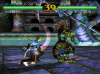
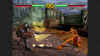
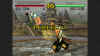
As perfect as perfect
gets in 1999.
|
Along with enhanced graphics, the Dreamcast version also features a
variety of extra
modes, such as: Exhibition Mode (where you
can watch awesomely fluid "katas" performed by each character - previously played during the idle state of the arcade version). Other bonus modes include a vast Art
Gallery with tons of unlockable concept art, and a Theater Mode where you can listen to the jaw-dropping number of character
voice-overs and music tracks in the game. The Dreamcast version also allows
you to create
your own custom intro for the game using various cinematics! All innovative modes and features for a console fighting game at the time.
|
|

| Page Updated: |
May
9th, 2025 |
| Developer(s): |
Namco |
| Publisher(s): |
Namco |
| Designer(s): |
Hiroaki
Yotoriyama
|
| Platform(s): |
Arcade,
Dreamcast, Xbox 360
(XBLA), iOS, Android
|
| Release Date(s): |
July 30th, 1998
Arcade
Aug. 5th, 1999
 Dreamcast Dreamcast
Sept. 9th, 1999  Dreamcast Dreamcast
July 2nd, 2008 Xbox Live
|
| Characters: |
Mitsurugi
/ Arthur, Ivy Valentine,
Hwang,
Sophitia Alexandra,
Siegfried,
Taki,
Voldo, Rock,
Maxi,
Yoshimitsu,
Kilik,
Xianghua,
Nightmare,
Astaroth,
Lizardman, Sueng Mina, Edge
Master, Inferno,
Cervantes
|
|
|
|
Featured Video:
|
|
|
| Related Games: |
Soul Edge, Soul
Calibur 2, Soul Calibur 2: HD Online,
Soul Calibur 3, Soul
Calibur 3: Arcade Edition, Soul Calibur
4, Soul Calibur: Broken Destiny, Soul Calibur 5,
Soul Calibur 6, Soul Calibur: Lost Swords, Soul Calibur
Legends, Samurai Shodown: Warrior's Rage,
Dead or Alive 2, Bloody
Roar 2, Mortal Kombat Gold, Power
Stone, Buriki One, Battle
Arena Toshinden 4, Tekken Tag Tournament,
Virtua Fighter 3TB, Namco X
Capcom |
|

|
|
Gameplay
Engine
|
10 / 10
|
|
Story
/ Theme
|
9.5 / 10
|
|
Overall
Graphics
|
10 / 10
|
|
Animation
|
10 / 10
|
|
Music
/ Sound Effects
|
10 / 10
|
|
Innovation
|
10 / 10
|
|
Art Direction
|
10 / 10
|
|
Customization
|
9.0 / 10
|
|
Options / Extras
|
9.5 / 10
|
|
Intro / Presentation
|
9.0 / 10
|
|
Replayability / Fun
|
10 / 10
|
|
"Ouch" Factor
|
9.5 / 10
|
|
Characters
|
10 / 10
|
|
BOTTOM LINE
|
10
/
10
|
|
Review based on Dreamcast
version
|
|
| Final
Words: |
The original Soul Calibur made a pretty big impact at arcades when it
launched, even though it wasn't perfect visually. The freedom of movement and "3D feel" of the game was a real treat for those who learned how to play it. The enhanced Dreamcast
version was indeed the "rebirth" of the game, and once again, was hands down the best-looking console fighting game (ever) on the market when it launched in September 1999. SoulCalibur on Dreamcast certainly turned many heads back in the direction of fighting games at the time.
The charismatic characters, flashy weapon trails, and crispy visuals on Dreamcast were all "extra" things that made SoulCalibur great. The real players from the arcade, remember. This game is actually fun to play, incredibly deep, rewarding, and takes a long time to master. Characters have huge movelists, interesting commands and unique stances,
all which bring incredible depth to the gameplay.
The Dreamcast version of SoulCalibur brought an unprecedented level of detail and impressive amount
of in-game content, delivering a truly enthralling gameplay experience to
back it all up. Groundbreaking graphics, innovative characters & play-styles, brilliant motion capture, highly technical gameplay, and a great variety of features earns SoulCalibur a 10 out of 10... one of the best fighting games ever made? Absolutely.
Not only is SoulCalibur is a Namco classic that stands
the test of time... the first SoulCalibur also paved the way for some excellent sequels in the years to come. As much as I loved (and still love) the original SoulCalibur, the gameplay depth and experience "peaked" in the sequel, SoulCalibur II, which released several years later.
~TFG
Webmaster | @Fighters_Gen
|
|
|
|
|
|
|
|
|
|
|
 View more
products at
View more
products at